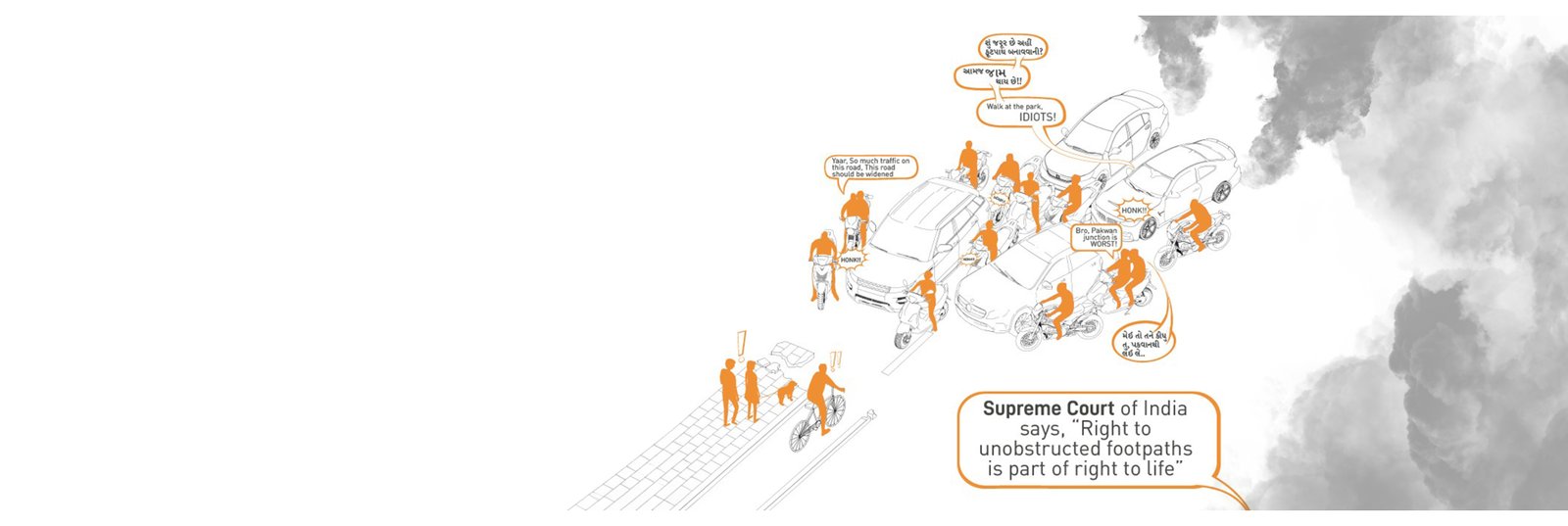
Right To Walk
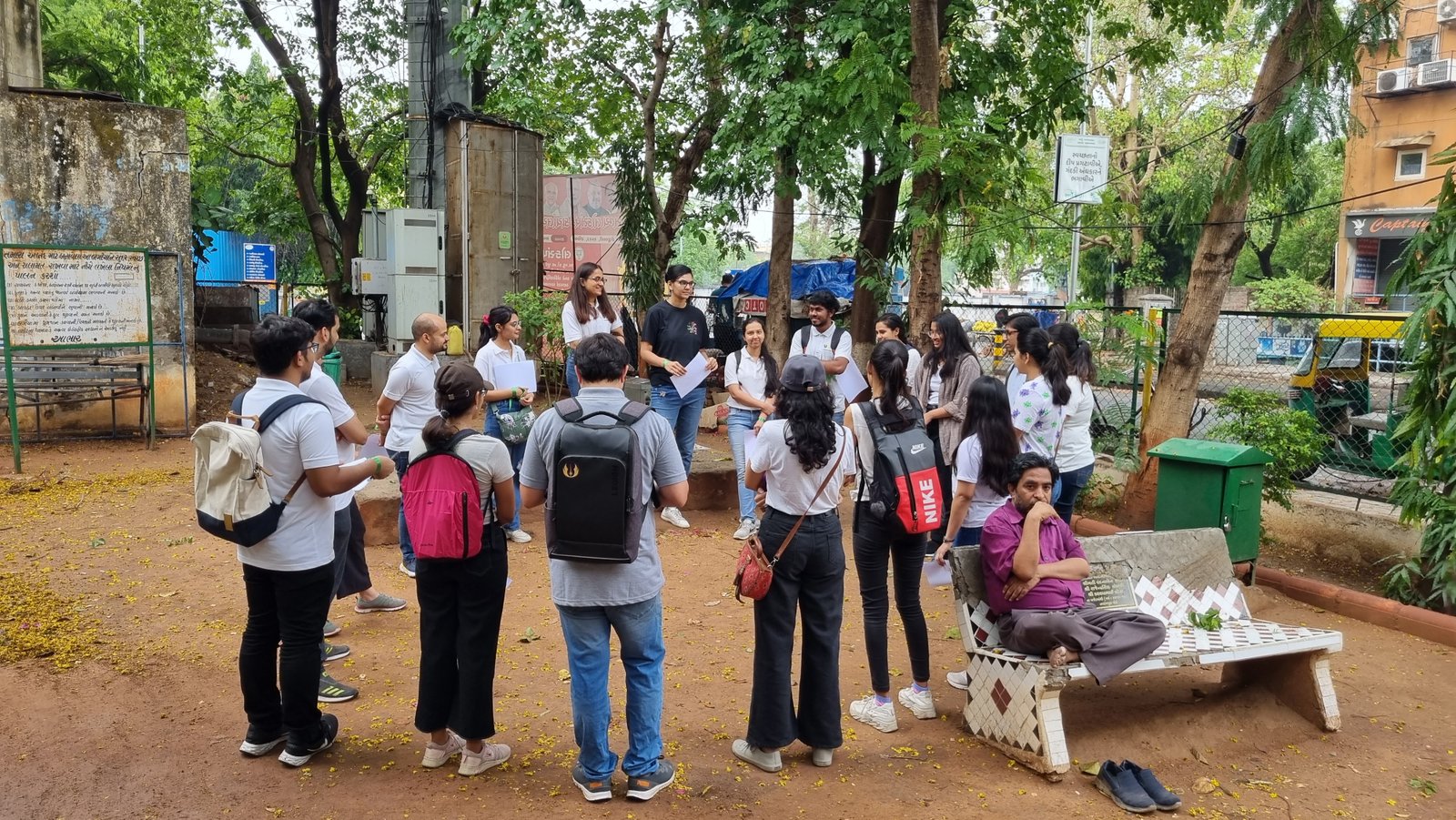
Our walking audit began with a simple thought: what it really feels to be a pedestrian in our own city? With the support of our volunteers, we sought out to understand the everyday challenges people face when they step out to walk. The "Right to Walk" is protected under our constitutional right to life and personal liberty (Article 21), still safe and continuous footpaths remain rare. Traffic and cars often take priority, leaving very little space for pedestrians.
“Protection of life and personal liberty: No person shall be deprived of his life or personal liberty except according to procedure established by law.”
— Article 21, Constitution of India
About the initiative
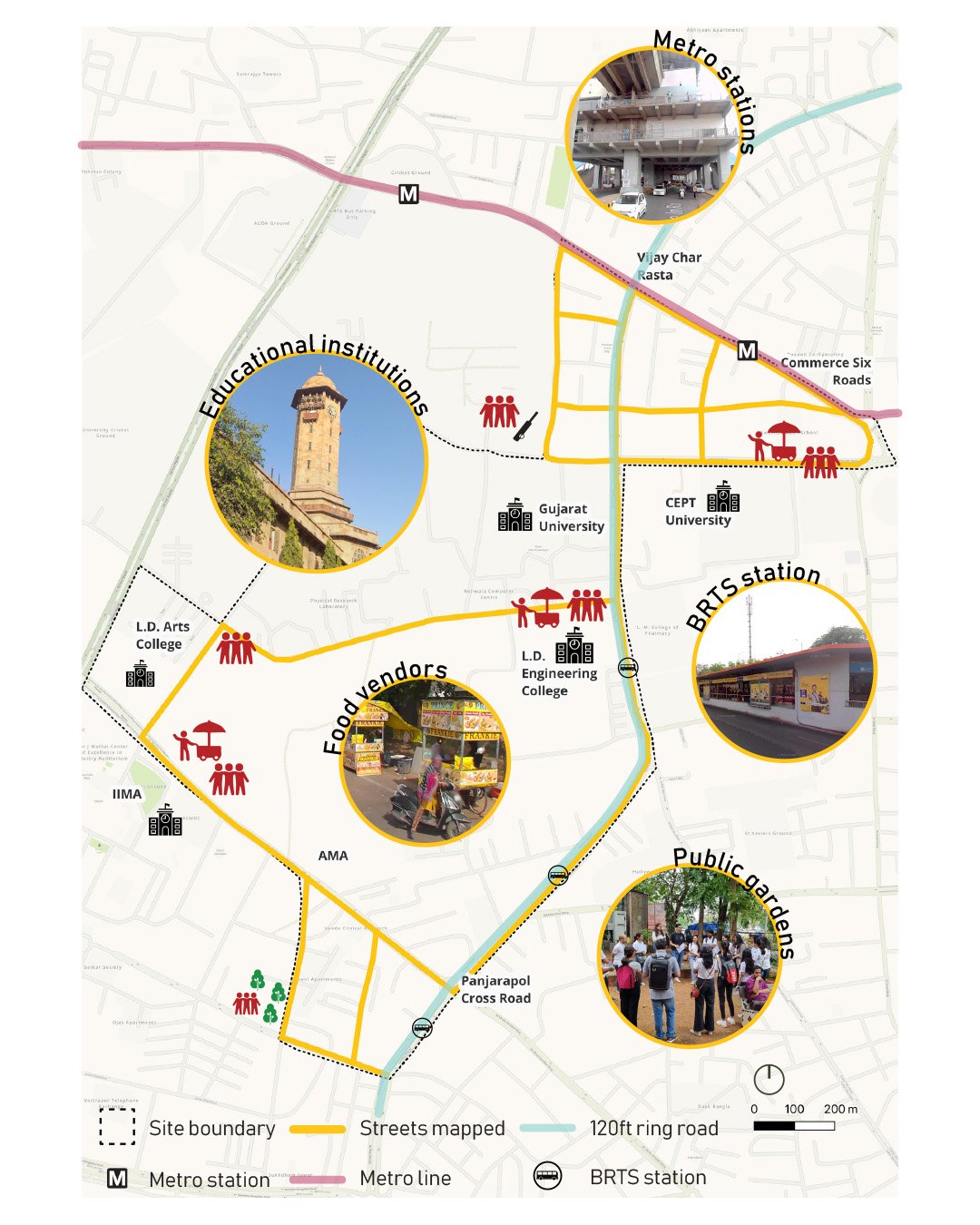
This initiative aims to raise awareness about the challenges faced by pedestrians, such as unsafe or encroached footpaths, and to promote policy changes that ensure safer walking environments. We designed this audit as a hands-on tool that local residents, students, and even decision-makers can use to document walkability. Together with our team and volunteers, we mapped 18 km of streets in Navrangpura, Ahmedabad, from narrow local roads (12m) to wider arterial roads (36m).
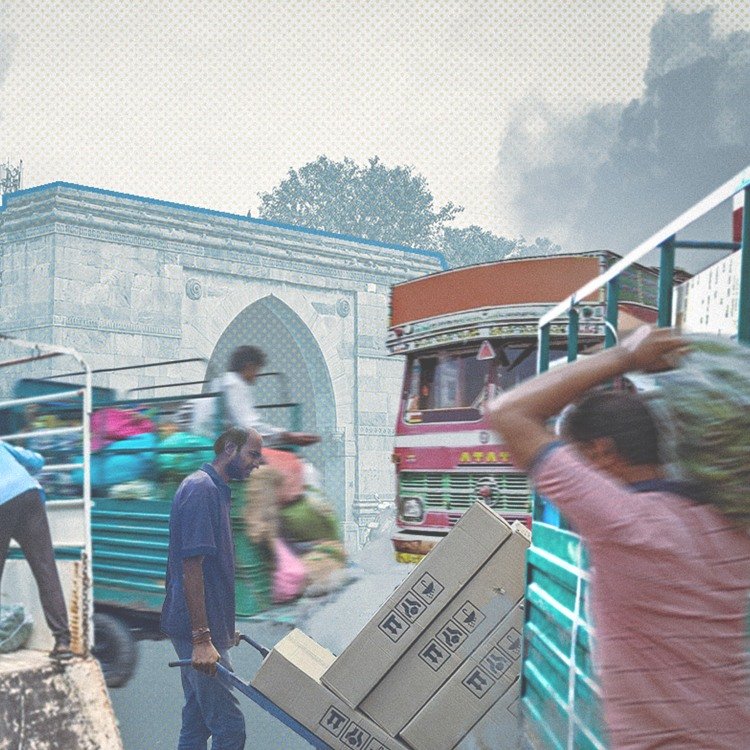
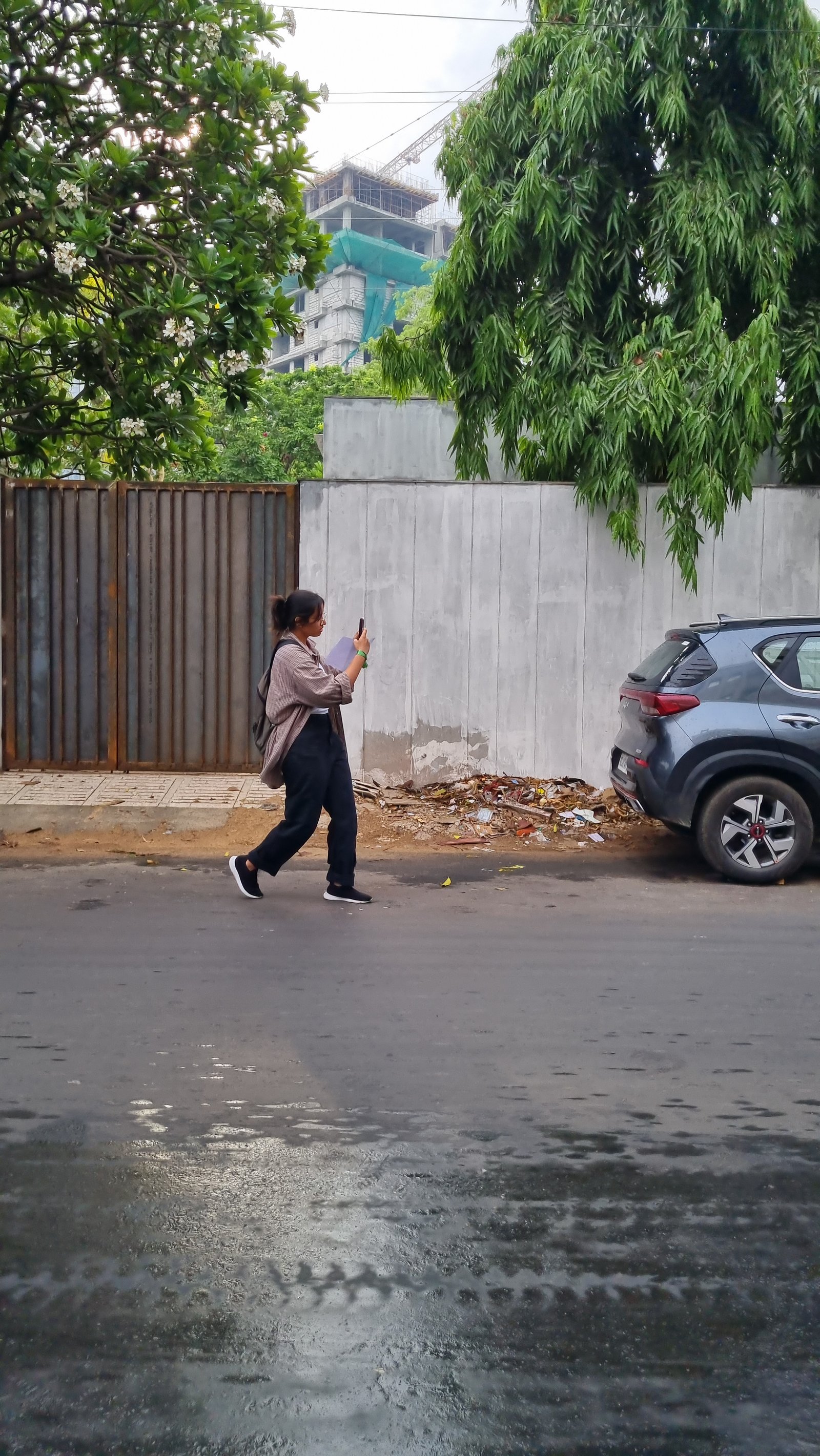
The area is full of schools, colleges, street vendors, which makes the streets vibrant with high foot traffic but also congested. Vendors, parked vehicles, and public utilities often spill onto footpaths, leaving little space for walking. As a result, people are pushed onto busy roads, making something as simple as walking unsafe.
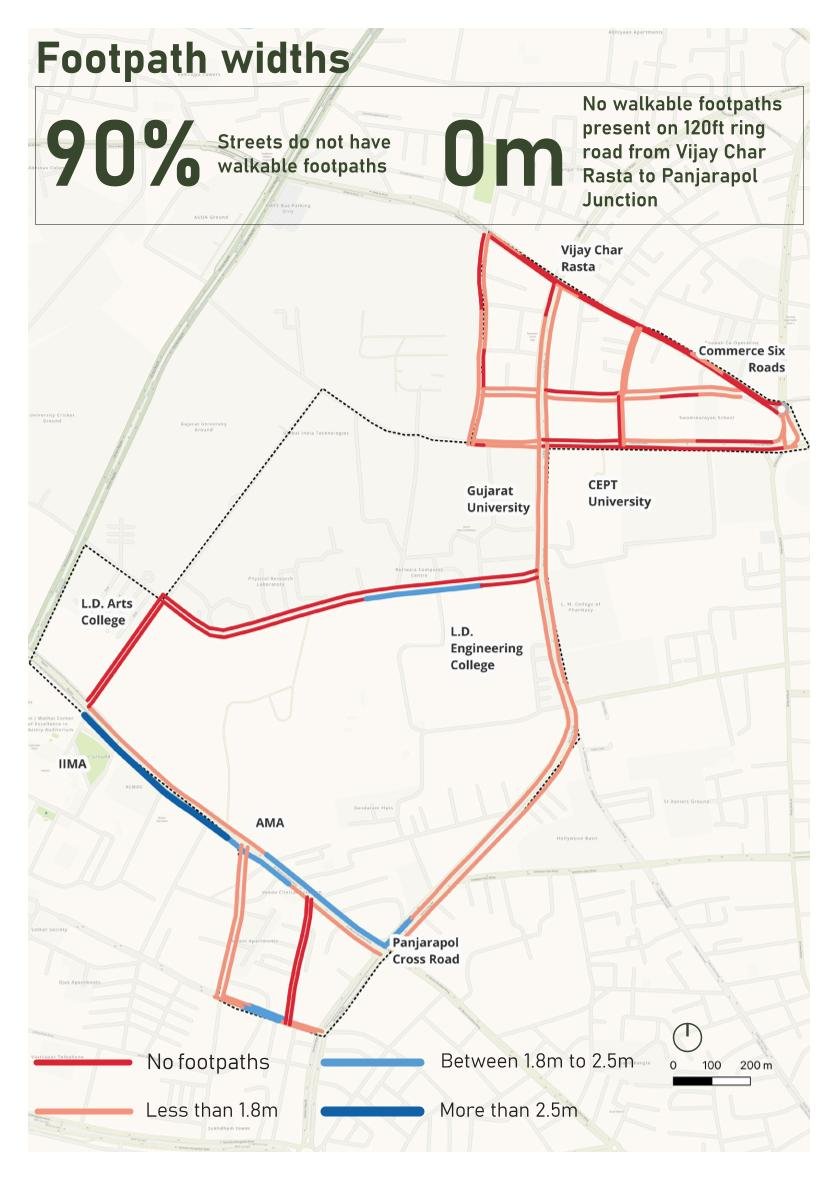
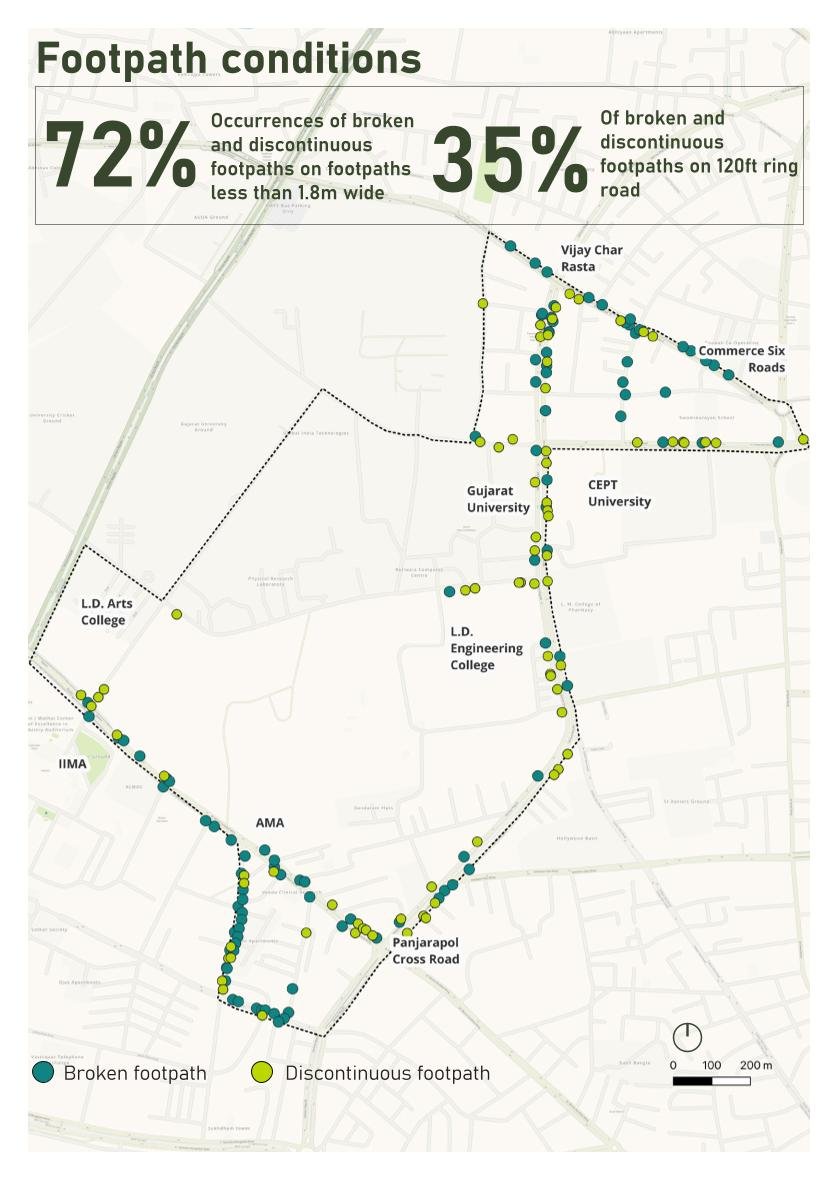
What We Found
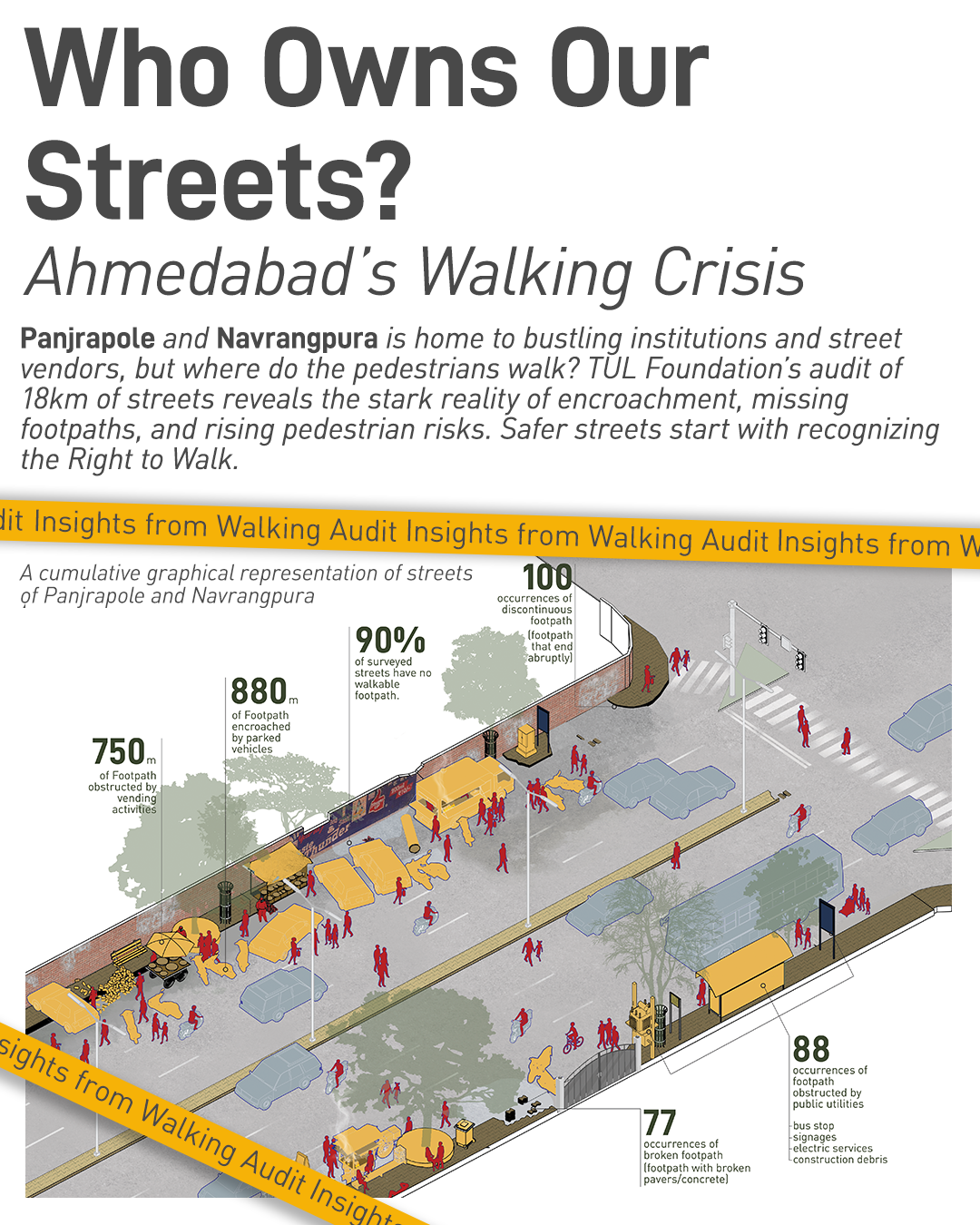
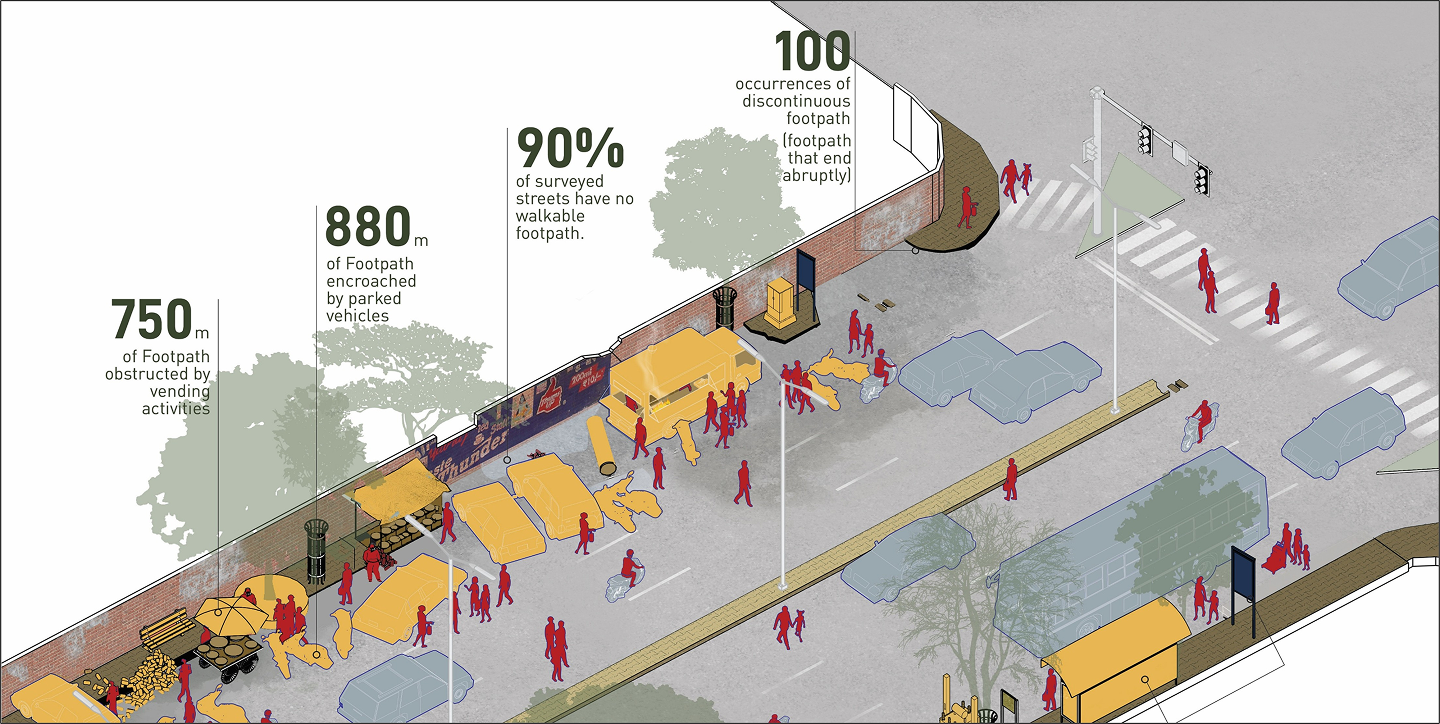
- 90% Audited streets had no walkable footpaths
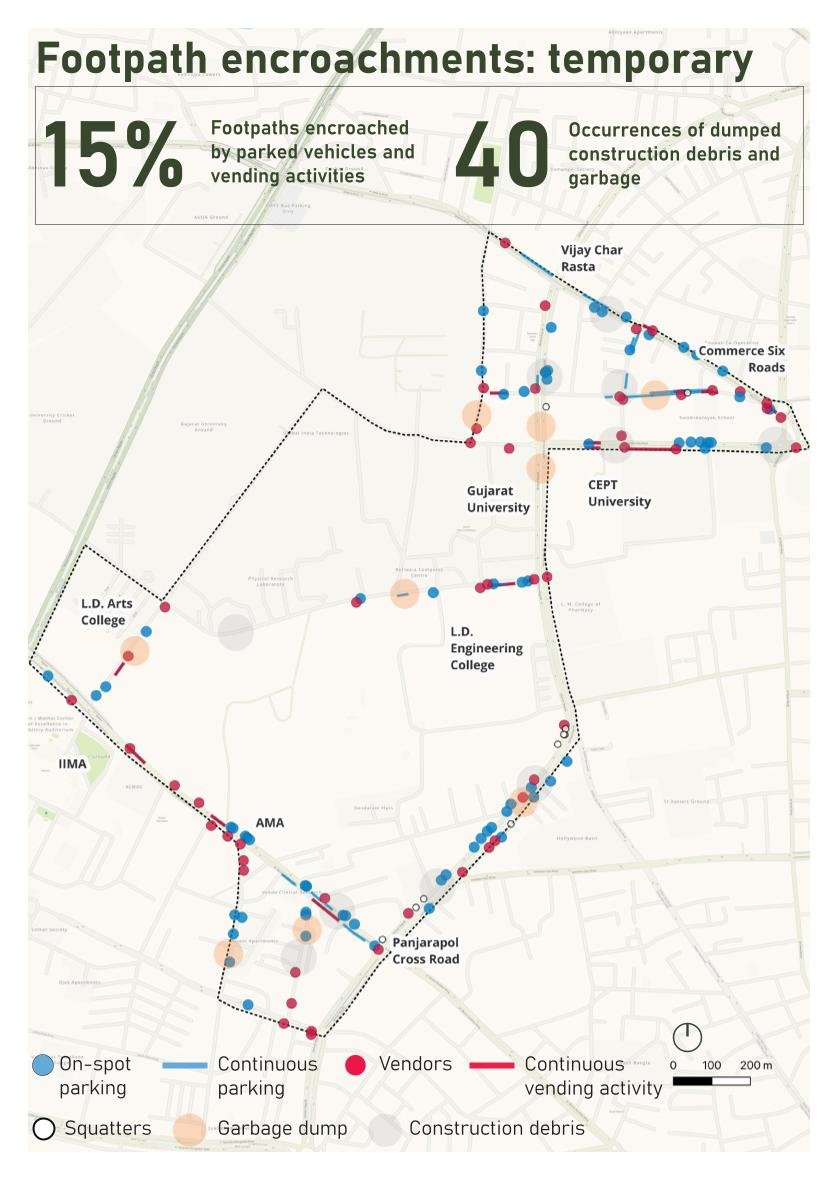
- 750 m footpaths were occupied by vending stalls
- 880 m footpaths were encroached by parked vehicles
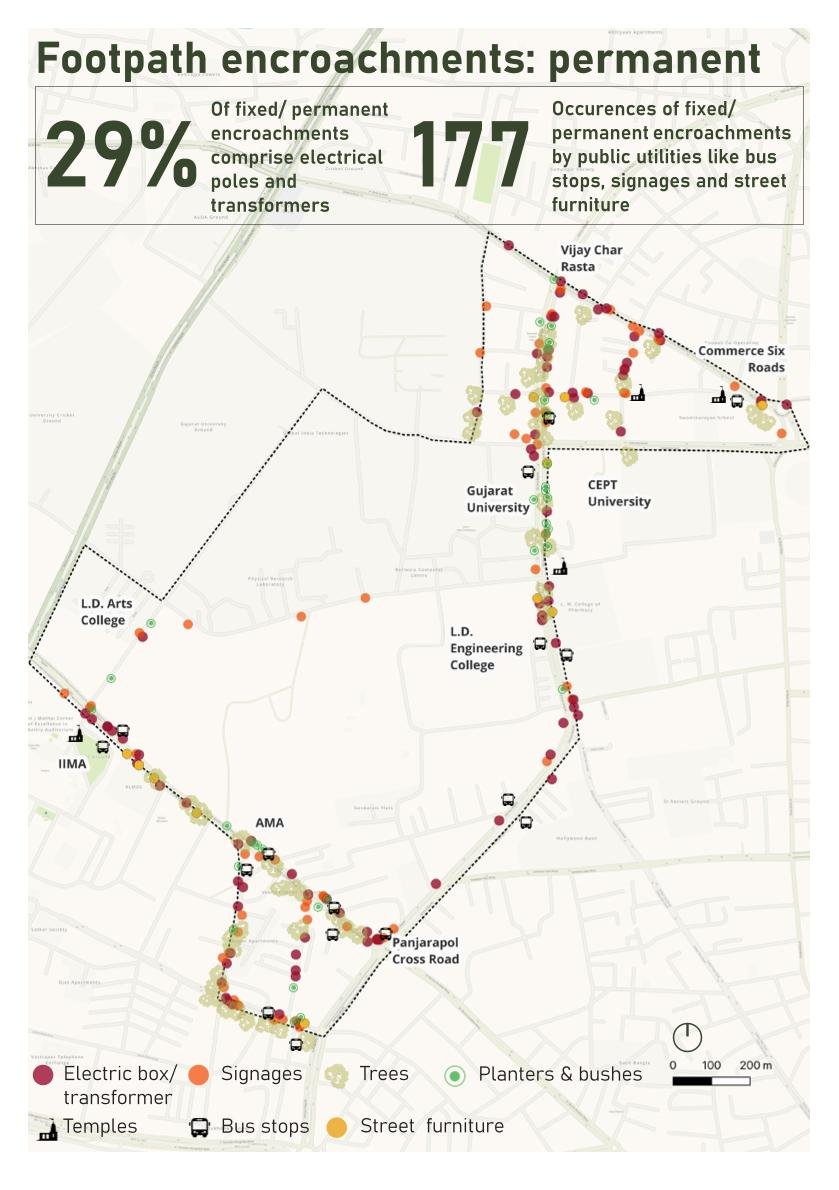
- 177 Instances where public utilities encroached on footpath
What we hope to change
This evidence-led campaign can help authorities recognise walkability gaps and make footpath upgrades and pedestrian safety a clear priority in urban budgeting and planning. This pilot project also shows how small-scale studies can inform micro-level planning such as creating better spaces for utilities, streamlining their placement, and ensuring they do not spill onto walking paths. The findings can feed into spatial planning practices, while also pointing toward the need for larger policy reforms that enable and strengthen non-motorised transport.